Table of Contents
TLDR
Ubisoft took Rainbow Six Siege completely offline after a massive hack gave players billions of in-game credits, ultra-rare skins, and randomly applied or removed account bans. The breach affected all platforms globally, forcing an unprecedented total shutdown whilst Ubisoft investigates the security incident. Players exploited the vulnerability to unlock exclusive content worth substantial amounts, raising serious questions about the game’s backend security architecture.
Rainbow Six Siege Servers Hit by Unprecedented Gaming Hack
Rainbow Six Siege experienced one of gaming’s most severe security breaches when hackers compromised Ubisoft’s backend systems at 9:10 AM on Saturday, the official Rainbow Six Siege account on X confirmed the incident. The attack wasn’t subtle. Players suddenly received billions of in-game credits, ultra-exclusive skins that normally cost hundreds of pounds, and random ban alterations across their accounts.
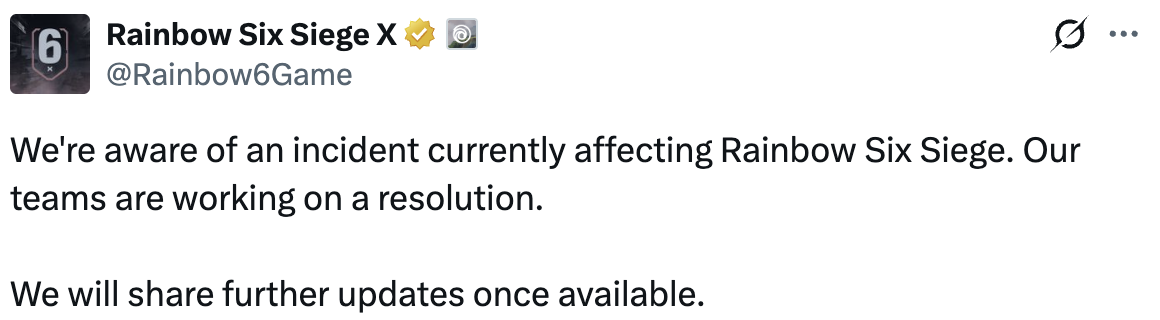
Ubisoft responded by pulling every server offline. Console players, PC gamers, everyone got booted. The company stated they needed to investigate “an issue impacting our infrastructure” but the damage was already visible across social media platforms.
Here’s the thing: this wasn’t just about free cosmetics. The breach demonstrated complete access to Ubisoft’s player database and currency systems. That’s the kind of vulnerability that keeps security teams awake at night.
What Actually Happened During the Rainbow Six Siege Breach
The hackers gained access to core game systems that control player inventories, currency allocation, and account status flags. Players reported receiving anywhere from 600 to 900 billion Renown credits. Some accounts got rare skins like the Glacier universal skin, which normally requires specific pack purchases.
The breach also affected account bans. Some banned players found themselves unbanned. Others got banned without reason. The inconsistency suggests the attackers were either testing system access or deliberately causing chaos.
William Fieldhouse, Director of Aardwolf Security Ltd, explains: “This type of breach indicates serious backend vulnerabilities. When attackers can arbitrarily modify player currencies, inventories, and account statuses, they’ve essentially gained administrative access to core database functions. The inconsistent application of changes suggests either automated exploitation or multiple attack vectors being tested simultaneously.”
Ubisoft’s infrastructure clearly lacked proper access controls between public-facing game services and sensitive database operations. That’s a fundamental security architecture failure.
Technical Analysis of the Gaming Security Incident
The attack vector likely exploited API endpoints that lacked proper authentication or authorisation checks. Modern games use countless API calls for inventory updates, currency transactions, and account modifications. If developers don’t implement proper web application penetration testing during development, these endpoints become easy targets.
Take the currency injection as an example. The system apparently accepted arbitrary values without validation checks. A properly secured system would have maximum thresholds, transaction logging, and anomaly detection. Rainbow Six Siege’s infrastructure had none of these safeguards functioning effectively.
The ban manipulation demonstrates even deeper access. Account status flags typically require elevated privileges to modify. The attackers either compromised admin credentials or found a privilege escalation vulnerability. Both scenarios point to serious security gaps that a comprehensive security assessment would have identified.
Gaming companies often treat security as an afterthought. They focus on gameplay mechanics and revenue models whilst leaving backend systems vulnerable. This incident proves that approach doesn’t work anymore.
Industry Impact and Player Response
The Rainbow Six Siege community responded with predictable chaos. Reddit threads filled with screenshots of billion-credit balances and exclusive skins. Some players deliberately exploited the vulnerability before Ubisoft could respond. Others worried about potential rollbacks or permanent account damage.
Ubisoft’s official statement remained vague: “We’re investigating an issue impacting our infrastructure.” That corporate speak doesn’t inspire confidence. Players want transparency about what happened, what data was exposed, and what’s being done to prevent recurrence.
The gaming industry watches incidents like this closely. Rainbow Six Siege has millions of active players and generates substantial revenue through microtransactions. A breach that compromises the entire currency system undermines player trust and threatens the game’s economic model.
William Fieldhouse notes: “The reputational damage from this breach extends beyond immediate technical fixes. Players who spent real money on in-game items now see that content distributed freely through a hack. That fundamentally breaks the perceived value of digital purchases and raises questions about whether the platform can be trusted with future transactions.”
Other gaming companies need to learn from this. Your security is only as strong as your weakest API endpoint.
What This Means for Gaming Security Going Forward
This breach highlights systemic problems in gaming industry security practices. Developers rush features to market without proper security testing. Backend systems get cobbled together with inadequate access controls. Testing focuses on functionality rather than security implications.
Working with the best penetration testing company should be standard practice for any game handling user accounts and virtual currencies. These assessments identify vulnerabilities before attackers exploit them. They’re significantly cheaper than emergency incident response and rebuilding player trust.
The Rainbow Six Siege hack demonstrates what happens when security becomes an afterthought. Ubisoft now faces investigation costs, potential compensation, reputation damage, and player churn. All preventable with proper security architecture and regular testing.
Gaming companies must implement proper API security, database access controls, and transaction monitoring. They need incident response plans that go beyond “turn everything off and hope.” They require regular security assessments that actually test real-world attack scenarios.
Players deserve platforms that protect their accounts and respect their investments. Developers who can’t guarantee basic security shouldn’t be handling player data or real-money transactions.
Conclusion
The Rainbow Six Siege breach exposed serious vulnerabilities in Ubisoft’s infrastructure and highlighted broader security problems across the gaming industry. When attackers can freely manipulate player currencies, inventories, and account statuses, something’s fundamentally broken in the security architecture.
Gaming companies need to prioritise security alongside gameplay features. Regular penetration testing, proper API security, and robust access controls aren’t optional anymore. They’re essential for protecting player trust and business viability.
If you’re developing or operating online gaming platforms, don’t wait for a breach to expose your vulnerabilities. Get a penetration test quote from security professionals who understand modern attack vectors and can identify weaknesses before hackers do.
The Rainbow Six Siege hack proves that gaming security isn’t just about preventing cheaters. It’s about protecting entire ecosystems of player trust, economic value
Subscribe to our newsletter
Honest updates, straight to your inbox. Unsubscribe any time.