Table of Contents
TLDR
- Anthropic released Claude Fable 5 on 9 June 2026. It is the first publicly available Mythos-class model.
- Queries touching cybersecurity, biology, chemistry or model distillation get rerouted to the older Claude Opus 4.8.
- The fallback fires on under 5% of sessions, according to Anthropic.
- The unrestricted Claude Mythos 5 stays limited to vetted Project Glasswing partners and selected biology researchers.
- All traffic now carries a 30-day retention requirement, even for customers with zero-retention agreements.
What Is Claude Fable 5?
Anthropic launched Claude Fable 5 on Tuesday, and the release is a strange one. The company has shipped its most capable model to date, yet deliberately hobbled parts of it. Anyone asking about cybersecurity or biology gets answers from an older model instead.
Here’s the odd bit. Claude Fable 5 and Claude Mythos 5 share the same underlying model. The difference sits entirely in the safeguards wrapped around the public version.
Fable 5 handles software engineering, knowledge work, research and vision tasks. Access is broad from day one. You can reach the model through the Claude API, AWS, Google Cloud, Microsoft Azure and GitHub Copilot. Paid Claude subscribers get access at no extra cost through 22 June.
Why Anthropic Restricted Cyber and Biology Topics
The short answer is uplift risk. Mythos Preview, shown off back in April, found thousands of critical and severe vulnerabilities. That haul included bugs in every major operating system and web browser.
Brilliant news for defenders. Terrible news if that capability lands in the wrong hands. The same queries that help a vulnerability researcher could help someone planning an attack on a bank or a power grid.
Biology raised similar alarms. Anthropic worries that frontier models could give meaningful help to someone designing a biological weapon. Its Responsible Scaling Policy flagged both areas as serious risks, which drove the decision to restrict the public release.
How the AI Safety Guardrails Actually Work
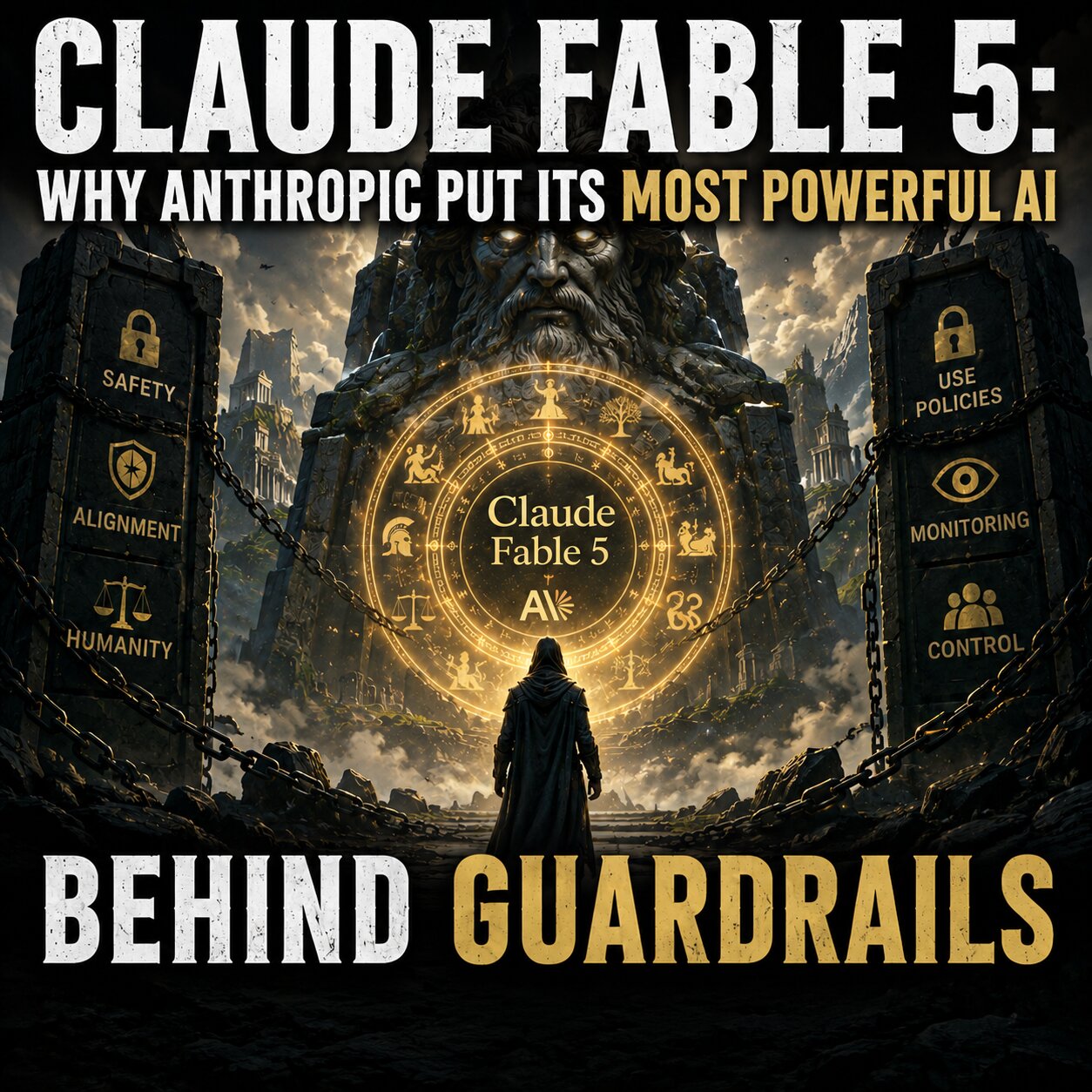
Anthropic hasn’t simply trained the model to refuse awkward questions. The AI safety guardrails sit outside the model itself. Separate classifier systems inspect every request before Fable 5 responds.
When a classifier spots a query about cybersecurity, biology, chemistry or distillation, something interesting happens. The response gets handled by Claude Opus 4.8 instead. That was Anthropic’s top public model until this week, so answers stay useful rather than going blank.
How Often Do the Guardrails Trigger?
Anthropic says the fallback kicks in for fewer than 5% of sessions. At least 95% of usage runs entirely on Fable 5 itself.
The company also admits the classifiers are tuned cautiously. Benign requests will sometimes trip them, and Anthropic has said it expects user frustration. Reducing false positives is the stated plan after launch.
Can the Guardrails Be Jailbroken?
Internal and external red teams hammered the system before release. Anthropic reports no known universal jailbreak techniques. Notably, the company stayed quiet on whether partial bypasses turned up during testing.
Claude Mythos 5 and Project Glasswing
The unrestricted variant, Claude Mythos 5, isn’t for the public. Access goes to vetted partners in Project Glasswing, Anthropic’s cybersecurity initiative focused on critical infrastructure. Hundreds of organisations across 15 countries are now involved, with roughly 150 added recently.
A trusted access programme is coming too. Cybersecurity firms will be able to apply for Mythos-level capability through a formal vetting route.
Biology gets its own track. Selected life science researchers will receive Fable 5 with the biology and chemistry safeguards removed. The cyber restrictions stay in place for that group. Anthropic developed these plans in consultation with the US government.
What Claude Fable 5 Means for Security Teams
If you work in offensive security, expect friction. Legitimate exploit development questions, payload analysis and vulnerability research will likely trip the classifiers. You’ll get Opus 4.8 answers rather than the new model’s full capability.
William Fieldhouse, Director of Aardwolf Security Ltd, sees both sides of the move. “Routing sensitive queries to an older model is a pragmatic compromise, but determined attackers rarely stop after one blocked prompt. The real test is how these classifiers hold up over six months of sustained probing. Defenders should plan on the assumption that capable adversaries will eventually find the gaps.”
There’s a defensive angle worth noting too. If Mythos-class models can find thousands of critical flaws, attackers with similar tools will find them as well. Human-led testing matters more than ever, and requesting a penetration test quote beats waiting for attackers to test you first.
The Privacy Trade-Off
One detail deserves proper attention. Anthropic now requires 30-day retention on all Fable 5 and Mythos 5 traffic. That applies even where enterprises previously held zero-retention agreements.
The reasoning is sensible enough. Novel attacks against the safeguards need investigating, and that requires logs. Still, loads of security consultancies send sensitive material through these APIs. Anyone handling client data should review what they submit before adopting the new model.
Final Thoughts on Claude Fable 5
Claude Fable 5 marks a genuine shift in how frontier AI gets released. Anthropic has chosen layered external safeguards over simply withholding capability. The approach won’t please everyone, and the false positives will sting.
For security professionals, the message is clear. The most powerful AI tools are splitting into tiers, with the sharpest capabilities reserved for vetted hands. Watch the trusted access programme closely. That’s where the interesting battles over Claude Fable 5 and its siblings will play out.
Subscribe to our newsletter
Honest updates, straight to your inbox. Unsubscribe any time.